Frequently Asked Questions
What are the benefits of automated machine tending?
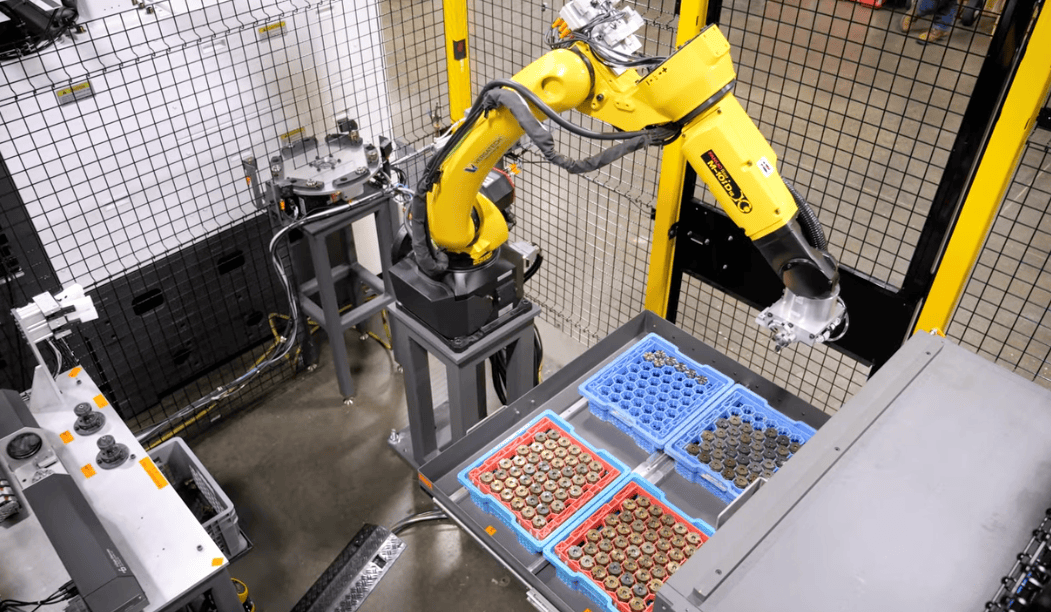
CNC machine tending automation uses a robot positioned at the machine door to pick raw parts from an input staging area, load them into the machine chuck or fixture, and unload finished parts to an output conveyor or tray. The robot communicates with the CNC via discrete I/O or MTConnect to coordinate door open/close, chuck clamp/unclamp, and cycle start signals. Versatech designs machine tending cells for single machines and multi-machine configurations where one robot tends two or more CNCs in sequence, maximizing spindle utilization.
How does workholding improve manufacturing efficiency?
Robotic machine tending works best with hydraulic or pneumatic workholding that can be actuated automatically via the machine's PLC — eliminating the need for an operator to manually clamp and unclamp. Zero-point clamping systems allow fast, repeatable part location with sub-0.01mm repeatability and are well-suited for high-mix applications where fixtures change frequently. Versatech designs custom workholding fixtures matched to the part geometry and the robot's gripper, ensuring consistent part location and clamping force on every cycle.
What types of machine tending systems are available?
High-mix machine tending uses recipe-based robot programs where each part number has a stored program for gripper position, load/unload path, and fixture clamping sequence. The operator selects the part number on the HMI, and the system loads the corresponding robot program and fixture parameters automatically. Quick-change tooling on the robot gripper allows physical changeover in under two minutes for parts with significantly different geometries. Versatech designs high-mix cells with storage for 20 or more part programs and documents the changeover procedure for each.
How can I integrate robots with CNC operations?
Manual machine tending typically results in 60 to 75% spindle utilization due to operator availability, breaks, and load/unload time variability. Robotic tending consistently achieves 85 to 95% spindle utilization by eliminating wait time between cycles and enabling lights-out operation during off-shifts. Load/unload time with a robot is also faster and more consistent than manual handling, which can reduce the non-cut portion of the cycle by 15 to 30 seconds per part depending on part weight and fixture complexity.
What features should I look for in workholding fixtures?
A single-machine robotic tending cell typically requires 6 to 10 feet of floor space in front of the machine for the robot base, part staging, and safety guarding. Compact configurations using a robot mounted on a linear track or overhead gantry can reduce the floor footprint when space is constrained. Versatech conducts a facility layout review during the quoting process and provides a 2D floor plan showing the cell footprint, guarding perimeter, and operator access points before the project is finalized.
How does automation reduce labor content in manufacturing?
Collaborative robots are used for machine tending when part weight is under 10 to 15kg, cycle times allow for the slower cobot speed, and the application benefits from reduced guarding requirements. The main limitation is payload and speed — cobots run at reduced velocity in collaborative mode, which adds time to each load/unload cycle. For heavy parts or high-volume applications where cycle time is critical, a traditional industrial robot with proper guarding is more appropriate. Versatech evaluates both options and recommends based on the specific part, volume, and facility requirements.
What industries benefit from machine tending solutions?
Part location accuracy in robotic machine tending depends on the gripper design, the part staging method, and the fixture locating features. Vision-guided pick from a conveyor or tray compensates for part position variation at the input stage. Precision gripper fingers matched to the part datum surfaces ensure consistent orientation during transfer. The fixture itself provides final location — Versatech designs fixtures with hard stops and locating pins that bring the part to the correct position regardless of minor gripper placement variation, achieving repeatable location within ±0.05mm in most applications.
How can workholding fixtures enhance repeatability?
Workholding fixtures enhance repeatability by securely positioning parts during machining processes, ensuring consistent alignment and reducing variability. This leads to improved accuracy and quality in manufacturing, ultimately boosting overall production efficiency.
What is the role of automation in manufacturing?
The role of automation in manufacturing is to enhance efficiency, reduce labor costs, and improve precision in production processes. By integrating automated systems, manufacturers can achieve higher output and consistency while minimizing human error.
How do I choose the right machine tending system?
Choosing the right machine tending system involves assessing your specific manufacturing needs, including the type of machinery, production volume, and desired automation level. Collaborate with experts to ensure optimal integration and efficiency.
What are the latest trends in workholding technology?
The latest trends in workholding technology include the integration of smart sensors for real-time monitoring, the use of modular and adaptable fixtures for increased flexibility, and advancements in automation that enhance precision and efficiency in manufacturing processes.
How can automated machine tending increase productivity?
Automated machine tending increases productivity by streamlining operations, reducing labor costs, and enhancing consistency in manufacturing processes. This integration allows for continuous operation, minimizing downtime and maximizing output efficiency.
What challenges are associated with machine tending?
The challenges associated with machine tending include ensuring proper integration with existing machinery, managing the complexity of automation systems, and addressing the need for precise programming and maintenance to achieve optimal efficiency and reliability.
How do workholding solutions impact production costs?
Workholding solutions significantly impact production costs by enhancing efficiency and reducing cycle times. By improving part stability and repeatability, these systems minimize scrap rates and labor expenses, ultimately leading to cost savings in manufacturing processes.
What is the future of machine tending automation?
The future of machine tending automation is characterized by increased integration of advanced robotics, artificial intelligence, and machine learning, leading to enhanced efficiency, flexibility, and productivity in manufacturing processes.
How can I optimize my workholding setup?
Optimizing your workholding setup involves assessing fixture design for versatility, ensuring precise alignment, and integrating automation solutions to enhance repeatability and efficiency in your manufacturing processes.
What are common applications for machine tending?
Common applications for machine tending include loading and unloading CNC machines, automated assembly lines, and material handling processes. These systems enhance efficiency, reduce labor costs, and improve production consistency across various manufacturing environments.
How does Versatech™ support automation integration?
Versatech™ supports automation integration by designing custom machine tending systems and workholding fixtures that seamlessly interface with CNC operations, enhancing efficiency and ensuring reliable performance in manufacturing processes.
What are the key components of machine tending systems?
The key components of machine tending systems include robotic arms for handling parts, workholding fixtures for secure part placement, and integration software that connects the system with CNC machines to streamline operations and improve efficiency.
How can I improve my workholding design?
Improving your workholding design involves optimizing fixture geometry for better part stability, selecting appropriate materials for durability, and ensuring compatibility with your CNC machinery. Additionally, consider automation integration to enhance efficiency and repeatability in your manufacturing processes.
What safety considerations exist for machine tending?
Safety considerations for machine tending include ensuring proper guarding of machinery, implementing emergency stop mechanisms, providing adequate training for operators, and maintaining clear communication protocols to prevent accidents and injuries during automated processes.
How does machine tending affect cycle times?
Machine tending significantly affects cycle times by automating the loading and unloading processes, which minimizes downtime and maximizes machine utilization. This leads to faster production rates and improved overall efficiency in manufacturing operations.
What customization options are available for workholding?
Customization options for workholding include tailored designs for specific parts, adjustable fixtures for varying sizes, and integration with existing machinery to enhance efficiency and flexibility in manufacturing processes.
How can I evaluate machine tending system performance?
Evaluating machine tending system performance involves analyzing key metrics such as cycle time, uptime, and overall equipment effectiveness (OEE). Regularly monitoring these factors will help identify areas for improvement and ensure optimal efficiency in your manufacturing processes.
What are the advantages of custom workholding fixtures?
The advantages of custom workholding fixtures include enhanced precision, improved repeatability, and optimized workflow tailored to specific manufacturing needs, ultimately leading to increased efficiency and reduced production costs.
How does automation influence workforce requirements?
Automation influences workforce requirements by streamlining processes, which can reduce the need for manual labor while simultaneously increasing the demand for skilled workers to manage and maintain automated systems.
What is the impact of machine tending on quality?
The impact of machine tending on quality is significant. By automating the handling of parts, machine tending systems enhance precision, reduce human error, and ensure consistent production standards, ultimately leading to improved product quality and reliability.
How can I train staff for machine tending systems?
Training staff for machine tending systems involves providing hands-on experience with the equipment, offering comprehensive technical training, and utilizing simulation tools to enhance understanding of automation processes and safety protocols.
What are the maintenance needs for workholding fixtures?
The maintenance needs for workholding fixtures include regular inspections for wear and tear, cleaning to remove debris, and lubrication of moving parts to ensure optimal performance and longevity.